






Specification Guide to Ceilings and Acoustic Absorbers

Specifiers’ Guide - Ceilings and Acoustic Absorbers was published by the Finishes and Interiors Sector (FIS) in 2021.
It was written and produced by the FIS Ceilings and Absorbers working group which comprises representation from manufacturers, suppliers and contractors involved in the design, supply and construction of ceiling systems
The aim of the guide is to help architects, designers and installers through the criteria in selecting and specifying a suspended ceiling and acoustic absorber that will satisfy the performance needs of an internal space while providing the desired visual effect.
The guide addresses what a good specification looks like and how it should be structured – it even includes 10 top tips to producing a specification. It then breaks down the key performance issues around fire and acoustics and the other issues of volatile organic compounds, light reflectance, impact resistance, air permeability, wind loading, sustainability and conformity marking.
Iain McIlwee, FIS Chief Executive said: “This guide, written by industry specialists, pulls together decades of experience from specification managers who almost instinctively know the questions on all aspects – from performance, material characteristics, sustainability and environmental, conformity marking, installation, maintenance and end of life. In total, there are 36 parameters to consider to ensure a safe, compliant and complete specification. This is crucial if the specification is not to be misinterpreted and any alternatives assessed and checked as equal before approving them.”
The contents of the guide are:
- Foreword
- Introduction
- Scope
- The specification
- Design Considerations
- Performance
- Acoustics
- Other material characteristics
- Sustainability
- Conformity marks
- Material types
- Ceiling Systems
- Installation Considerations
- Top 10 reasons why ceilings fail
- Appendix: regulation and guidance documents, standards
You can download the Specifiers’ Guide - Ceilings and Acoustic Absorbers here.

For further information or for any questions please contact FIS at [email protected] or contact construction marketing communications agency Fabrick.
--FIS
[edit] Related articles on Designing Buildings
- Acoustic consultant.
- Acoustic design for health and wellbeing.
- Airborne sound.
- Approved Document E.
- Ash deafening.
- Audio frequency.
- Building Bulletin 93: acoustic design of schools.
- Building regulations.
- Ceiling tiles.
- Decibel.
- Flanking sound.
- Impact sound.
- Metamaterials.
- Noise nuisance.
- Pre-completion sound testing.
- Reverberation.
- Robust details certification scheme.
- Room acoustics.
- Sound absorption.
- Sound insulation.
- Sound insulation in dwellings: Part 1: An introduction (GG 83-1).
- Sound reduction index (SRI).
- Sound v noise.
- Structure-borne sound.
- Suitable insulation can help preserve the golden sound of silence.
- Suitably Qualified Acoustician.
Featured articles
Check out some of the best features and news from Designing Buildings as well as key stories from around the web.

The Master Builder: William Butterfield and his times. Book review.

Why construction can't afford to ignore the skills gap.
Building Safety Regulator, 19 August

Gill Kernick appointed Independent Chair of Residents’ Panel.
Connecting knowledge, technology and conservation
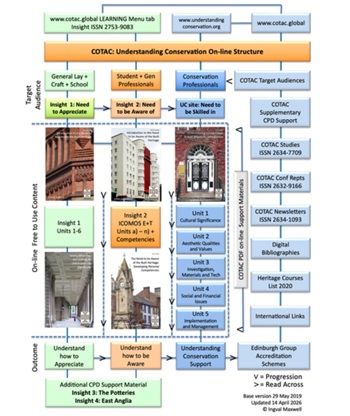
Building competence for the future of built heritage.
Building Regulations and Building Safety Act
CIOB publishes free advice for non-domestic clients.

Building Safety Newsletter from MHCLG.
An extraordinary record of steel engineering worldwide.

Households living near new pylons to save on bills.

ECA warns growth must not outpace grid capacity or skills.
The role of the client and decision making

CIOB response to built environment professions call for evidence.
Construction's sustainability reporting revolution
Tracking upfront embodied carbon with digital tools.
ECA welcomes procurement reforms

Public spending must back British jobs and skills.